Wednesday, May 23, 2007

Reading Lolita in Tehran by Azar Nafisi


This book is a memoir about life in Iran. Its formal structure expands from the discussions of a secret book club that meets in the author's living room in Tehran to read and discuss banned books like Lolita, The Great Gatsby, Daisy Miller, and Pride and Prejudice. Beyond the book club, the author reminisces about life before, during, and after the revolution, the ascendence of the Ayatollah, and how life became so wretched for women in this country that was once so progressive.


The first fifty pages of this book I really disliked. I find the descriptions of the book club meetings overly precious and romantic, all the "magical mornings" and the "they bloomed into color" and how she dwells on their separate personalities. It all reads as very contrived, to me, since she said in the beginning that none of the characters were actually characters, that they are amalgams and distillations of actual people, renamed, combined, separated. So why dwell on each invented person's invented personality, especially in a "memoir"? I kind of liked her reading of Lolita. She is painfully aware of how her critical perspective is informed and skewed by her identification of Humbert as the Ayatollah, though. Which is good. But I'm not automatically receptive to feminism, even coming from someone in a chabor.


Then, for serious and for real, it started getting good. I think the beginning of the part that made my ears perk up was the anecdote about Nassrin (I think it was her) missing class and then coming back to report she had been jailed for 48 hours because the morality police had accused her of having "A Western attitude." And then CANED her for it? Lord. Makes me want to smack crabby academic feminists in this country in the head and say, "Dumbass, you think you've got problems?!" I realize that's probably irrational, but that's the reaction I had.


The Gatsby section I liked much better. I am flabbergasted by the way the Muslim fundamentalists and the Marxist extremists collaborated on the Islamic revolution. I had no idea that was going on -- how Marxist women in combat fatiques with shaved heads and totally, like, hardass communist ideas (communism being ideally genderless, in terms of all proletariats being equal) putting on VEILS to help the revolution, just because they wanted the Western influence out of Iran. Like, how shortsighted was THAT? Has to be one of the most idiotic political choices ever. You can just imagine some avid Marxist... and that "Adopt the veil to rid us of the West" speech must have been the last one she ever got to make in public. And the last time she got to walk down the street without her husband or father to walk behind.


The book makes a clear distinction between the people who had always been devout Muslims and those who adopted more extreme religious beliefs in order to gain political or social power. I think it's obviously necessary to separate people serving God in an honest and arduous way from people consciously using religion to oppress each other. I also, though, believe that what's corrupt at the top can be honest at the bottom -- that is, that there are people who virtuously and sincerely believe and follow oppressive rules because they genuinely believe that God wants them to, when in reality it's the people up at the top of the religion, handing down these strictures to enforce their agendas. So who to blame? There's a very blurry line between those who are conscious that it's all about power and control, and those who are blind to the human element at work, and only see God's will.


I have to believe that it's impossible for me to understand anyone in that part of the world -- totally impossible, because my cultural context is so foreign. So for me to look at those public virginity tests and say "What the hell!?" means nothing. Of course I can't understand it, it's beyond my scope and outside my experience. What's good about this book is seeing that there are people within that system for whom it is repulsive and horrifying as well. And not just those who have been to America and seen the contrast.


I stalled out reading this when I was still on the James section. I'd inadvertantly started reading about 10 books... forgetting I was already in progress on others that I'd just left lying around the house or car. I wanted to finish this, to get to the Jane Austen section, but I accidentally just read Persuasion instead.

Tuesday, May 15, 2007

One Flew Over the Cuckoo's Nest by Ken Kesey


Apparently everyone else on earth read this book in high school, and saw the movie too. Alright, well, I went to a Lutheran high school, and explaining the catheters made out of condoms (and reused!) might have given my freshman English teacher a few more questions than he was happy with. Not that he would have been thrilled about my ending a sentence with with. Twice. Actually he was really cool, and let us do Lord of the Flies as a feature video set in the hallways of our school. But I digress.

I found this book at the thrift store and bought it to read, and at the exact same moment, Veronica found it at her father's house, and took it home to read. This kind of literary synchronicity cannot be ignored. There must be significance.


Ken Kesey said he was too old to be a hippie and too young to be a beatnik, but he and his gang, the "Merry Pranksters" raised plenty of hell in their day, despite their lack of a popular category. One Flew Over the Cuckoo's Nest was his first novel, written mostly in graduate school, which gives everyone a little bit of undeserved hope.

I think the novel is brilliant for two reasons.

First, there is the narrator. The book is told, not by the main character, or by a disinterested narrator, but by a crazy person. So all the descriptions of the ward, Nurse Ratched, the crazies, are filtered through this altered consciousness. Kesey stays just on the correct side of being cute about it. Cuteness would have killed it, but as it was, Bromden's narration perfectly cranked up the feeling of being in another, twisted, horrific world. No external voice could have accomplished this. His point of view, maintained throughout, also helped us see the change in his mental state, happening so slowly that we almost don't notice it, without being told about it. So, at the end, we believe he is fully okay to go out into the world, although we witnessed the extent of his initial lunacy, because we also witnessed his progression back to functionality.

The second reason I loved this book was for its hooks. Instead of an either/or hook (will the world be saved? will the lovers unite?) there was a complicated engine. Because Bromden is pretending to be deaf and dumb, the very first page of the book presents a compelling reason to read on -- will he eventually speak, what will make him speak, and what will he say? The other question, "Will McMurphy defeat Nurse Ratched?" is also complex, beyond a yes-or-no answer, because the battle is being fought on such strange territory.


I read McMurphy as explosive humanity, glorious deviance -- the ability to see through rules and definitions to the agendas behind them. Therefore dangerous to stability and predictability that these rules and definitions provide. I read Ratched as establishment, enforcer, the hand on the lever that runs the gears. She could not suffer McMurphy because he understood her and was not afraid of her. In the book, as in life, she possessed the ultimate weapon, because even though she is an ideological fraud, she has all the physical power.

Veronica read a lot more gender issues into the book, which made a lot of sense as soon as she explained it to me. There was a viscious smart professional and a friendly stupid whore, and really no other women portrayed in the book. McMurphy could be read as the ultimate heroic male -- beyond the manipulation of the stifling woman, but ultimately brought down by her.

A few words about the movie:

Great. Brilliant. It did not have the same message as the book, and it did not have the same intensity. Having read the book just before I saw the movie, I didn't feel like a lot of the movie made sense without the stuff in the book, but taken on its own terms and without that prejudice, it was fantastic. Because of Jack Nicholson. He is an amazing actor. I mean, that's kind of retarded to say, at this point, but having just seen him in The Departed and now this, it is so interesting to me how he can play two different characters, and use all of his signature expressions, moves, inflections, etc, and still have the characters be so essentially themselves. It's a mystery!

Wednesday, April 11, 2007

Child of My Heart by Alice McDermott


Wow, this book was so uplifting and hilarious, I think I'll go and kill myself now! Hey! If you ever wondered whether children get the shortest, sharpest, boringest end of the stick in life, this book if your proof. If you belligerently insist that people are essentially good; adultery, abuse, neglect, and disinterest in their children notwithstanding; then you too can cling to the adolescent narrator for comfort. She introduces fantasy and love into the lives of all the sad little children she knows, and she knows only the saddest of little children. In the end, most of them survive. Survive to continue to endure the effects of their parents' ignorance and selfishness! Hooray!


This book makes me look around and feel profound gratefulness for my big pretty house, my loving husband, and my two healthy happy children that I adore. It makes me feel lucky that I had parents who loved me and a cool nanny who played silly pretend games with me.


Here's something funny: The book itself references the maudlin sentimentality in which some books about dead children indulge. The Publisher's Weekly review of this book accuses it of indulging in maudlin sentimentality. I can't find the exact quote in the book at this moment, with my daughter sitting on my lap helping, but I remember thinking, "Hmm," at the time.

Wednesday, March 21, 2007

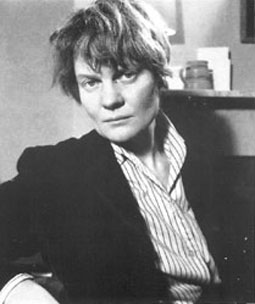
The Sacred and Profane Love Machine by Iris Murdoch

Everyone always says, O Iris Murdoch. Brutal, brilliant, irascible Iris Murdoch. She is so blazingly legendary. I watched the movie, "Iris," as I do slavishly watch all movies Kate Winslet graces, and I realized, I am supposed to love her. But I had never read one of her books, though I always meant to. Recently I picked up two Iris Murdoch books -- this one and The Black Prince, from a friend's book trading shelf. I was, I am sorry to confess, underwhelmed. Now I will say that I read it with great interest and at times felt very can't-put-it-down. But it did not delight me.

This book was brilliant realism. It was about a love triangle and some children were involved. One of the characters, Montague Small, was original in my experience -- I have not met a character like him before. There was a lot of anguish, and a depth of experience that was engrossing. I can't say I enjoyed reading the book. Taking a step back from the oppressive entanglements and all the emotions, I realized that the same characters and landscape, in a P.G. Wodehouse novel, would be hilarious. It is, in a way, bizarrely the same universe. P.G. Wodehouse is brutal, but so deeply cheerful. Murdoch's treatment is so close, so smothering, so dark. I was expecting more of the satire, less of the despair.

I will move on to The Black Prince -- I've already started it. It's hitting me a little like Humbert McHumbertson, so I dunno if I'm going to get the haw haw haw I'm looking for. Having read such a staggering lot of P.G. Wodehouse, since I was a little kid, and seeing the British upper class skewered in this very la-la pass-the-port way and hasn't everyone got a ridiculous name, it was maybe good for me, or something, to see this grittier and less raucous version of it. I mean, it's probably considered obscene to even compare these two writers, and I'll be met outside by a few stern feminists and beheaded for failing to appreciate Iris Murdoch. I said I would give her another shot. I have the next book in my bag. 'Kay?

Monday, February 26, 2007

Girl Imagined by Chance by Lance Olsen

First let me say that I read this book very quickly and kind of hungrily. It has a very specific voice and a kind of ethos that was very addictive, when I was reading it. I came away thinking, wow, what a masterful control he exhibited over that mess of material. I have to stand back and sincerely congratulate him for that. This book was deliberate, measured, never even remotely hysterical, unrigorous, or disconnected. I kept examining the method he used to get there, and found myself focusing on specifics. Sentences were manipulated in consistent and repetitious ways. For example, I remember specifically the quote, "Moving is as easy as changing your mind. Changing your mind is as easy as moving." That construct recurred. The narrator kept saying that some word or other was "perhaps too strong a word." There were a variety of different language constructions that made the book feel very specific, very contained. Like repetitions of objects or behaviors, like what the characters were eating or how they moved through their house. The "Snaggy Scree" bar recurred. (Which led me to look up "scree," and it means "bunch of little rocks around the foot of a mountain.") I found myself fascinated with these little manipulations, because while it *seems* like it would become tiresome/obvious/heavy, they were sprinkled in at a wavelength that just barely allowed you to forget about them before they popped up again. So they were comfortable, like being comfortably inside the book. Very well done. I can't think when I've seen second person present tense successfully managed without being kind of hyper and indulgent. This may have been the key to it. Control. Well, imagine that.

The book is about a couple who move from urban New Jersey to extremely rural Idaho, and take advantage of their safely remote location to invent a pregnancy and a child, satisfying the folks at home who are sufficiently distant and can neither verify nor disprove their claims. Apparently the pressure to reproduce (produce?) is really really intense. The wife is a photographer. The husband is a writer and web designer. The grandmother they are placating is supposed to die soon, but will she die before they have to make a visit?

The story is told in 12 sections, each starting out with a photograph, first of the wife, then of the fake baby. The book forces its "you" character to examine questions of authenticity by examining these old photographs of his wife as a baby, now faked by him to represent the fake child. (And in a secondary (tertiary?) way faked by the author to represent this fake autobiography -- WHEW!) What are they now? What were they then? He is examining in his own work the life of Virginia Dentatia, who died making the point that a human female body cannot survive the surgeries necessary to literally look like Barbie. So there's that. Real, fake, remembered, imagined, felt, dreamed, produced, reproduced. I thought it was acutely interesting to compare photography with having babies. I thought the whole book was extremely smart, very challenging, and also very grounded.

My only difficulty probably stems from the fact that I am a mother of two small children, and yes, I used to live more the "life of the mind" and yes, I do live now more the "life of the diaper." Am I defensive about giving up my whatever for my something else? Just as the book refuses to draw clear lines between autobiography and fiction (the author is also from New Jersey, living in Idaho, married to a photographer named Andi, and has no kids), I claim the right to refuse to draw a line between my strictly literary response to the book and my personal response. You could say I'm troubled because it's all. so. true. Or you could say I have a really admirable academic distance from the topic. Either way.

The narrator indulged in a lot of whacking away at some easy targets: kids at the mall, toddlers with runny noses, idealistic new parents, etc. The loathing. The eye-rolling. The revulsion. Yes, I do understand that when I am reading a first person narrator, I am not hearing the author's private thoughts, and I do not obviously blame Lance Olsen for this narrator's lapses into this kind of minor meanness. I like Lance Olsen a whole lot. But those pot shots did color the way I read the rest of the narrator's ideas about children and "reproduction" -- the fact that the examples he chose to use were so obvious and so thin. Show me a traditionally beautiful example of parenting and point out its weakness -- I love you. Show me a hackneyed example of of weak parenting (kids at the mall: so demanding! so impatient! so irritating!) and crow over it -- not so much. If he had taken a picture of a mother reading to an attentive child, and turned it inside out, shown how it was foul, shown how it was lies, that would be something.

I think any parent reading this book would look at this narrator and say, "You just don't get it." As it was, you just come away thinking that it's like trying to explain sex to a virgin -- unless you experience it, you just don't know. I thought for a while that he was going to fall kind of in love with his fake child, and have some kind of epiphanic moment, but thank god he didn't -- that would have been tragic on the other side of the spectrum. I think that the character did have some extremely redemptive moments, and by no means did I reject him based on his feelings about kids with runny noses (who really likes them anyway). There was a character in the book who had a child, Nadie, that I think the main character didn't actively despise. Certainly the wife character managed to pet the kid's hair. Seeing the way the couple responded to this one "good" example of parenting really illuminated how deep the damage was, as manifested in some of the "broken" photographs, that led them to the state they were in. Which was Idaho. And the ability to make up a baby and then kill it. I ended up thinking that in some ways his wife was his child, and he was hers.

This book was a really engaging read, from start to finish. Ask the poor souls who reached me on the phone while reading it -- I was yakking about it to anyone who would listen. The premise is wonderful, the intellect is inspiring, and the prose is so so so right. Buy, read, and rant.