
First let me say that I read this book very quickly and kind of hungrily. It has a very specific voice and a kind of ethos that was very addictive, when I was reading it. I came away thinking, wow, what a masterful control he exhibited over that mess of material. I have to stand back and sincerely congratulate him for that. This book was deliberate, measured, never even remotely hysterical, unrigorous, or disconnected. I kept examining the method he used to get there, and found myself focusing on specifics. Sentences were manipulated in consistent and repetitious ways. For example, I remember specifically the quote, "Moving is as easy as changing your mind. Changing your mind is as easy as moving." That construct recurred. The narrator kept saying that some word or other was "perhaps too strong a word." There were a variety of different language constructions that made the book feel very specific, very contained. Like repetitions of objects or behaviors, like what the characters were eating or how they moved through their house. The "Snaggy Scree" bar recurred. (Which led me to look up "scree," and it means "bunch of little rocks around the foot of a mountain.") I found myself fascinated with these little manipulations, because while it *seems* like it would become tiresome/obvious/heavy, they were sprinkled in at a wavelength that just barely allowed you to forget about them before they popped up again. So they were comfortable, like being comfortably inside the book. Very well done. I can't think when I've seen second person present tense successfully managed without being kind of hyper and indulgent. This may have been the key to it. Control. Well, imagine that.
The book is about a couple who move from urban New Jersey to extremely rural Idaho, and take advantage of their safely remote location to invent a pregnancy and a child, satisfying the folks at home who are sufficiently distant and can neither verify nor disprove their claims. Apparently the pressure to reproduce (produce?) is really really intense. The wife is a photographer. The husband is a writer and web designer. The grandmother they are placating is supposed to die soon, but will she die before they have to make a visit?
The story is told in 12 sections, each starting out with a photograph, first of the wife, then of the fake baby. The book forces its "you" character to examine questions of authenticity by examining these old photographs of his wife as a baby, now faked by him to represent the fake child. (And in a secondary (tertiary?) way faked by the author to represent this fake autobiography -- WHEW!) What are they now? What were they then? He is examining in his own work the life of Virginia Dentatia, who died making the point that a human female body cannot survive the surgeries necessary to literally look like Barbie. So there's that. Real, fake, remembered, imagined, felt, dreamed, produced, reproduced. I thought it was acutely interesting to compare photography with having babies. I thought the whole book was extremely smart, very challenging, and also very grounded.
My only difficulty probably stems from the fact that I am a mother of two small children, and yes, I used to live more the "life of the mind" and yes, I do live now more the "life of the diaper." Am I defensive about giving up my whatever for my something else? Just as the book refuses to draw clear lines between autobiography and fiction (the author is also from New Jersey, living in Idaho, married to a photographer named Andi, and has no kids), I claim the right to refuse to draw a line between my strictly literary response to the book and my personal response. You could say I'm troubled because it's all. so. true. Or you could say I have a really admirable academic distance from the topic. Either way.
The narrator indulged in a lot of whacking away at some easy targets: kids at the mall, toddlers with runny noses, idealistic new parents, etc. The loathing. The eye-rolling. The revulsion. Yes, I do understand that when I am reading a first person narrator, I am not hearing the author's private thoughts, and I do not obviously blame Lance Olsen for this narrator's lapses into this kind of minor meanness. I like Lance Olsen a whole lot. But those pot shots did color the way I read the rest of the narrator's ideas about children and "reproduction" -- the fact that the examples he chose to use were so obvious and so thin. Show me a traditionally beautiful example of parenting and point out its weakness -- I love you. Show me a hackneyed example of of weak parenting (kids at the mall: so demanding! so impatient! so irritating!) and crow over it -- not so much. If he had taken a picture of a mother reading to an attentive child, and turned it inside out, shown how it was foul, shown how it was lies, that would be something.
I think any parent reading this book would look at this narrator and say, "You just don't get it." As it was, you just come away thinking that it's like trying to explain sex to a virgin -- unless you experience it, you just don't know. I thought for a while that he was going to fall kind of in love with his fake child, and have some kind of epiphanic moment, but thank god he didn't -- that would have been tragic on the other side of the spectrum. I think that the character did have some extremely redemptive moments, and by no means did I reject him based on his feelings about kids with runny noses (who really likes them anyway). There was a character in the book who had a child, Nadie, that I think the main character didn't actively despise. Certainly the wife character managed to pet the kid's hair. Seeing the way the couple responded to this one "good" example of parenting really illuminated how deep the damage was, as manifested in some of the "broken" photographs, that led them to the state they were in. Which was Idaho. And the ability to make up a baby and then kill it. I ended up thinking that in some ways his wife was his child, and he was hers.

This book was a really engaging read, from start to finish. Ask the poor souls who reached me on the phone while reading it -- I was yakking about it to anyone who would listen. The premise is wonderful, the intellect is inspiring, and the prose is so so so right. Buy, read, and rant.


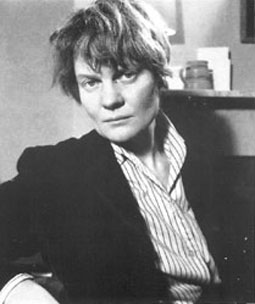
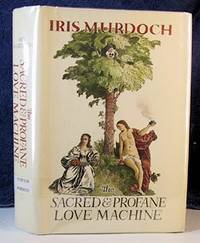 I will move on to The Black Prince -- I've already started it. It's hitting me a little like Humbert McHumbertson, so I dunno if I'm going to get the haw haw haw I'm looking for. Having read such a staggering lot of P.G. Wodehouse, since I was a little kid, and seeing the British upper class skewered in this very la-la pass-the-port way and hasn't everyone got a ridiculous name, it was maybe good for me, or something, to see this grittier and less raucous version of it. I mean, it's probably considered obscene to even compare these two writers, and I'll be met outside by a few stern feminists and beheaded for failing to appreciate Iris Murdoch. I said I would give her another shot. I have the next book in my bag. 'Kay?


