Showing posts with label writing. Show all posts

Friday, April 5, 2013

How to Write a Sci-Fi Flash Fiction Story: Part 3: The Crack in the Wall


(This post is part of a series. For part 1, click here. For part 2, click here.) 

I have one more tip for those of you who are writing sci-fi flash fiction, maybe even entering the Fly-By Sci-Fi contest to benefit Up Center Books this summer. This one may help you find a story that’s big enough to be significant and affecting, and small enough to be told in two pages, or 500 words. In the last part of this series, I focused on dissecting the climax, but now I want to look at the beginning of the story. The full plot arc of a novel has an inciting incident at one end and a climax at the other -- consider that you can tell your flash fiction from either end.

Yep, she's cracked.
When a writer thinks of when to start her story, it’s a good idea to look for firsts or lasts -- the first time something happened, or the last straw. You always want to launch your story on a day that violates the status quo, a day unlike any other, when something pushes your character to action and changes his/her world forever. When you’re writing micro-fiction, you can tell a whole story around just that first moment, when the change is initiated.

So how can a day be unlike any other? There are tons of ways -- tornado, plague, discovery, a lost tooth, , but here’s one that’s uniquely suited for the sci-fi milieu: it's a very tiny reversal that I'm calling the crack in the wall. It’s the very moment when good turns to bad, when safe turns to dangerous, when fixed turns to broken. This moment can be just small enough to be a perfect subject for flash fiction.

Think of a huge strong dam, holding back megatons of water, and imagine the moment that the very first crack is born.

Think of an impenetrable planetary shield, which keeps the inhabitants absolutely safe from all contact with the outside world, and imagine the moment that one small first particle (or person) gets through.

Good technology is good, until it's not. Then it kills you.
Think of a completely reliable piece of technology, that is unswervingly good and helpful and trustworthy, and imagine the moment that it first malfunctions, and wounds.

Think of a person who has been completely moral, just, and upstanding for her whole life, and imagine that first moment that she sins.

I’m talking about a crack in the metaphorical wall. The first, tiny crack. Sometimes in that first moment, the whole story is encapsulated, and that’s the kind of subject I’m looking for in flash fiction. Give me that first tiny crack and 500 words that let me see it, and my brain can fill in the rest of the fissure, the crumbling, the devastation. Give me that first crime, and my imagination can supply the dissolution, the aftermath, the ending.

You might also find yourself imagining sort of the opposite of a crack -- a tiny reversal that takes a character from devastation to redemption. The first good thing that happens. The first motion toward salvation. The first failure of an evil mechanism, when hope is born. The first friendly alien in a galaxy of wickedness. Writing in this direction could have the same effect -- a suggestion of the future that leads the reader to the beginning of the story.

Much of flash fiction’s value comes from what you say, but much of it comes from what you do not say, the necessary gaps you create that your reader fills in with her own extrapolation. And if you do it right, a short fiction can imply a whole novel’s worth of material, exploding, like a flash, in the reader’s brain. Good luck!


This spring, I am judging the Fly-By Sci-Fi Flash Fiction Contest, a writing contest to benefit Up Center Books. Writers in the Hampton Roads area will submit their best science-fiction-themed flash fiction to be judged first by instructors at The Muse Writing Center and then by me. Winners will win a writing class at The Muse, a nifty prize basket, and will share the microphone with me at the launch of the paperback edition of Shine Shine Shine, on July 10th, at Up Center Books. To encourage college students and adult writers who are tackling this challenge, and to give some guidance and support to teachers and parents who may be working with a younger child, I created this three part guide to explain a few (of many!) possible ways to approach writing a sci-fi short.

How to Write a Sci-Fi Flash Fiction Story: Part 2: Three Parts of the Punch


(This post is part of a series. For part 1, click here.)

Not this punch, smartass.
The second strategy for putting together a great story in a tiny space has less to do with topic and more to do with structure and chronology. You have decided on your story of a character in conflict, but the full scope of any character’s story really starts when the character is born and doesn't end until the character dies. Your most crucial job as a writer, especially as a flash fiction writer but really as a writer of any length of story, is to decide where to start and where to end. In the span of your character’s life, there may be a dozen major moments -- crises of relationships, physical dangers, decisions, turning points, etc. Maybe each character has the potential in him or her for a dozen novels or five hundred flash fictions.

The important decision is which one to tell, and then you must get as close to that critical moment as possible. You may have heard the popular writing advice to begin as late as you can and end as soon as you can. This is especially true in micro form, because there is no time to waste building up to a climax or wrapping up with explanations. No one wants to read a brief summary of a story -- they want to read the story itself, and that means immediacy, scene, physicality, dialogue. Some short shorts sound like elevator pitches for entire novels -- don't do that to yourself. Narrow your focus to the exact moment of conflict, to the pivotal scene itself, whichever one encapsulates the whole story. Now you deliver something visceral and immediate to your reader, while still telling the whole piece.

The moment of impact. 
To help you break it down into even smaller bits, think of a punch. Maybe the act of punching someone is the climax to which your character has been building, or maybe a punch is just an example and your actual climax is a kiss or a declaration or an exit or a car crash or the clink of handcuffs or a foot landing on a mountain summit or a baby being born -- whatever. I’m asking you to take that climax and break it into three smaller parts, and to help us examine that, let’s look at a punch.

A punch can be divided into three moments: the swing, the impact, and the shock. Those three discrete intervals can each be their own stories. You can tell a story in the moment when the hand is still in swing, you can tell a story in the moment with the hand and the face connect, and you can tell a story in the moment when the head is kicked back, reeling.

Check the ripples! That's shock.
When you take any climax and divide it like this, interesting things happen. For one thing, point of view becomes very important and clear. In the punch example, your story is of “the swing” is very different depending on whether you’re telling the story of the person punching or the person anticipating the pain. Likewise “the shock” would be very different. Examining your choices about where to position your narrative camera, you’ll find the most minute changes bring about interesting reverberations in your story.

So when you’re getting down to the business of writing a tiny story, I recommend you examine your scope. First, the character’s whole life. Second, the moment of climax you want to illustrate. Third, within that climax, which of the sections you want to focus on -- the swing, the impact, or the shock?

Back to Part 1 | On to Part 3
This spring, I am judging the Fly-By Sci-Fi Flash Fiction Contest, a writing contest to benefit Up Center Books. Writers in the Hampton Roads area will submit their best science-fiction-themed flash fiction to be judged first by instructors at The Muse Writing Center and then by me. Winners will win a writing class at The Muse, a nifty prize basket, and will share the microphone with me at the launch of the paperback edition of Shine Shine Shine, on July 10th, at Up Center Books. To encourage college students and adult writers who are tackling this challenge, and to give some guidance and support to teachers and parents who may be working with a younger child, I created this three part guide to explain a few (of many!) possible ways to approach writing a sci-fi short.

Thursday, April 4, 2013

How to Write a Sci-Fi Flash Fiction Story: Part 1: Fish Out of Water


Sci-fi Version: "For sale: Space suit. Never worn."
How hard could it be to write flash fiction!? After all, it only has to be 500 words long. You could get 500 words out of a detailed grocery list or an angry Facebook post calling for genetically modified undersea pothole relief. (Or calling for an end to it.)

True, writing 500 words is not hard. But what makes a story a story? What elevates your 500 words from the realm of the vignette or scene or sketch to the level of an actual short story? A reader can tell the difference between a paragraph and a piece of fiction -- there’s something about a story that feels complete, finished, whole, no matter how short it is.

This something is conflict. Conflict can be a fistfight or an internal battle, but either way it is struggle -- the struggle to move, either physically or emotionally, from point A to point B. So a story is a fight to move, no matter how minute the obstacle and no matter how infinitesimal the motion. That’s what makes it whole.

Conflict can be tricky to set up even in a long form short story, and sci-fi conflict can be even more tricky. You may find yourself imagining world-building that takes chapters, alien races that must be described in glorious detail, histories of space battles with implications that span thousands of years. The idea of condensing it into the space of 500 words seems laughable. But here are three ways you can ignite your story in a very tiny space, and a few secrets to help you get it firing immediately. (Parts 2 and 3 are linked below.)

#1. THE FISH OUT OF WATER


When sci-fi works best, the most alien of situations relate to very familiar human experiences. One category of conflict that is instantly relatable and needs very little wordy explanation is the fish out of water.

Get your jungle character into this neighborhood.
Generating this story is easy: Take a character and place him in circumstances that are opposite what he’s used to.

On the most obvious level, this can be physical. Take a character who’s used to the desert and put him on a snowy planet. Take a character who breathes water and put him on a mountain (literally the fish out of water). A city dweller in the country, a nocturnal person forced out in the day, a cave dweller on the plains. Instant conflict, just add physical discomfort, the urgent need to adapt, survive, on a primal level.

Goodbye, city life! 
On another level, this shift in circumstances might have less to do with setting and the fear of death, and more to do with the character’s identity and the fear of discovery. Maybe this is a man living as a woman, a child in a man’s body, a corporate drone living like a king on a tropical island. (Apparently Tom Hanks has a gift for portraying the fish out of water on film!) Again you have immediate and impending doom in the threat of people finding out -- any near escape would give you a chunk of conflict just the right size for a story in micro.

Your character misses his lonely hermitage.
Perhaps the most interesting way to do this type of conflict is on an ideological level. A character accustomed to freedom is in chains, a character accustomed to oppression is suddenly free, a character who lives in a ruggedly individualistic society finds himself on a commune, a character from a caste system finds himself in an egalitarian world. Here the character’s understanding must shift in some significant way, giving way to pressure from his new surroundings, or coming to a new understanding based on this new context.

Science fiction or speculative fiction is perfect for this type of set-up. Time travel, interplanetary travel, alien species, and the pervasive themes of exploration and discovery lead to many of these juxtapositions -- showing a moment of the resulting conflict can be just enough story to fill up a short short.

In the next post in this series, I’ll talk about strategy #2: Find Three Parts of the Peak.

This spring, I am judging the Fly-By Sci-Fi Flash Fiction Contest, a writing contest to benefit Up Center Books. Writers in the Hampton Roads area will submit their best science-fiction-themed flash fiction to be judged first by instructors at The Muse Writing Center and then by me. Winners will win a writing class at The Muse, a nifty prize basket, and will share the microphone with me at the launch of the paperback edition of Shine Shine Shine, on July 10th, at Up Center Books. To encourage college students and adult writers who are tackling this challenge, and to give some guidance and support to teachers and parents who may be working with a younger child, I created this three part guide to explain a few (of many!) possible ways to approach writing a sci-fi short.

Friday, January 25, 2013

How to Teach a Child to Write a Novel

Why teach a child to write a novel? It makes them sharper readers, more critical thinkers, and gives them a vast sense of accomplishment, the confidence to tackle a grand task by breaking it down into bits and knocking them out one by one. A child who understands the construction of a book from the inside, even on the most rudimentary level, will approach the next book she reads more thoughtfully, with better questions, and a deeper grasp of what goes into making books work.

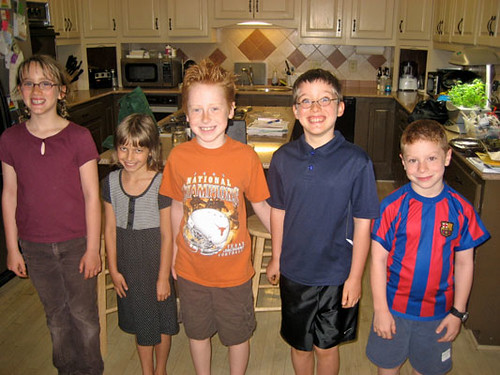
I've been homeschooling since my son was born, and always have tried to keep books at the center of our studies. I first published this set of lessons on my homeschooling blog in 2009, when I took my son and a bunch of his elementary school friends through eight weekly lessons about heroes, villains, plot, and conflict: The Junior Secret Noveling Club. I've updated the PDF this year, prompted by several requests for more info about the lessons, and I'm posting the new link here with this excerpt from the intro.

Download the free 40 page lesson plan booklet here


The process of writing a novel can be broken down for your child into eight lessons. This curriculum is less a curriculum and more a club. Kids will name their club, choose a secret handshake and “oath,” and earn “badges” by doing weekly lessons, games, and activities. By completing these lessons, the student prepares him or herself for the task of writing a novel, without ever getting spooked by the enormity of the task.

To form your own Junior Secret Novelist Club, you will first need some kids. Six is a good number. For optimal fun and awesomeness, these should be mostly kids who are pretty game. Naysaying kids who are nervous and uncertain will definitely benefit from this course, but there should be a good percentage of kids who will jump in with both feet and not be afraid to get a little crazy. With a few enthusiastic little writers in the mix, the hesitators will be more likely to cast aside doubt and join right in.


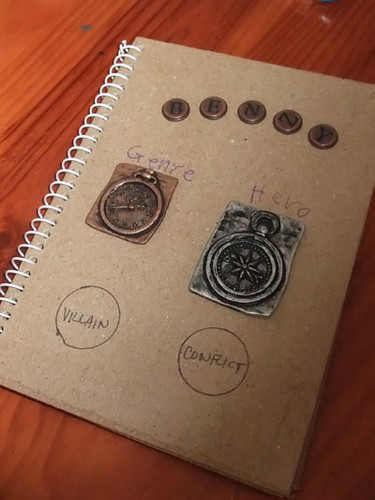
You’ll need a notebook for the kids to write in, do their homework in, and use to collect their exercises. Choose a small notebook, not a standard size, so they can really fill it up. A 3x5 is too small, but an 8x10 is too big. 6x9 is perfect, and recycled paper is cool. Ideally the notebook will have a sturdy front and back cover, since this is where the students will be collecting their badges. You will also need eight very very cool stickers per child that are more like badges than paper stickers. I found three dimensional glossy flower ones for the girls, and metallic compass/clock stickers for the boys. Look in the scrapbooking aisle for something that will really make their eyes go wide.

The key concepts are as follows:

Writing a novel is fun.
Writing a novel can be broken down into easy, manageable steps.
By the time you get to the part where you have a blank page in front of you, you have a solid, detailed plan and lots of material to use in your book.
Planning and writing your own novel helps you become a better reader of books that others have written.
Finishing means getting all your badges, not writing a complete novel and typing The End at the end.

On the front cover of the notebook, mark off four spaces, and label them GENRE, HERO, VILLAIN, and CONFLICT. On the back cover, mark off four more spaces, and label them SETTING, PLOT MAP, ANALYSIS, and CHAPTER LIST. Each week, as the children complete the exercises, you’ll hand out their badges.

The final thing you’ll need is something really super ridiculous to award them at the end of the course. I used a cool-looking paper clip, which became the Official Novel Writing Paperclip. After the final meeting of the club, you will pass out these official totems, and authorize the students to write their novels. Yes, it will be silly, but yes, you very much need something tangible. You could use hats, t-shirts, socks, necklaces, or whatever can be turned into an official, authorized novel writing item.

Kids, notebooks, badges, and a final prize. If you have all that in order, you are ready to begin!


Monday, August 27, 2012

The Difficult Second Novel


First book. Done.
It's sitting there in a neat pile by my desk. My first novel, Shine Shine Shine, in glittering, glowing advance reader copies. The blurbs are in, the cover is designed, the thing has been revised fifty thousand times, and its pages contain everything I wanted to say about humanity, love, death, motherhood, and fear. Every word has been analyzed, moved, changed, tweaked, and every line is purposeful. And I like it.

It's sitting there in a file on my computer. My second novel, as yet untitled. It is a first draft, which means it hulks and skitters across the page. It is unfinished, which means I don't know all its secret agendas and devious little plans yet. It might change. It's full of stupidly repeated words. It's got place-holder dialogue and language, like "Describe the institute lobby here, fool, if you can." And I'm a little afraid of it.

In my imagination, the first book addresses the second:

Second book. Not done.
"What's up, noob? Hey, you got some pie filling on your collar. Or is that self-indulgent interior monologue? Dang, you're going to need to revise that, honey!"

Smartypants first book is not very tolerant of the second book's growing pains. Like an older sibling that pokes a baby and says, "Can it play yet?" Really, I want to love them both. But the first book is just so charming. Second book looks monstrous in comparison.

If I were a potter this would be easy.
I like a nice chili bowl. (Credit)

The first book is like a glazed, finished bowl. It's microwave-safe. Its motif is well defined. It's symmetrical. You can eat chili out of it and not die of lead poisoning. You can put it on your shelf and admire it. You can say to your neighbor: "I made that" and your neighbor will not back away in terror.

This is actual clay mined by me.
The second book is like a lump of clay you just dug up out of the yard. It has rocks in it, and streaks of dirt, and it's as symmetrical as a brain tumor, and if you tried to eat chili out of it... well, you would never try to do that. Because who eats chili out of a hideous lump of clay? Who would EVER want to do THAT?

"No one," whispers the first book. "Because it's just so hideous!"

The difficult second novel (or album). Is this really a thing? Oh yes, it's such a common problem that there are blogs and bands named after it. Stephen Fry explained it like this:

"The problem with a second novel is that it takes almost no time to write compared with a first novel. If I write my first novel in a month at the age of 23, and my second novel takes me two years, which have I written more quickly? The second of course. The first took 23 years, and contains all the experience, pain, stored-up artistry, anger, love, hope, comic invention and despair of that lifetime. The second is an act of professional writing. That is why it is so much more difficult."

Is that why it's so difficult? I'm not sure. Maybe there are other reasons. Here's my list:

1. It's always hard to draft. Writing through the drafting stage while the first novel is sitting there winking at you, fully edited and polished, takes a lot of fortitude. It's hard to remember your first book was once this difficult, that it once sat in tatters as you completely rearranged the timeline, that it used to be three main characters instead of one, that there was a really pretentious and unlikable stock trader in it, that it once had a line in it where one woman held the other woman's entire husband in her mouth, like a cat. It's hard to remember that the first novel used to be bad, used to be rough, used to be just like this.

2. The second novel sends you in a definite direction. The first novel is a point on a graph. The second novel is another point on the graph. But in between these points, something very significant is formed -- a vector. And the vector points to your future as a writer, and where your career will go. With one novel under your belt, and a second in the works, it feels like you could put the second point anywhere.


Darker, or lighter. More romantic, less. More literary, more commercial. More about cats, more about dogs. More hope, more despair. But ALL of those choices seem dangerous. If I write another book about artichokes, does that mean that all my future books must be about artichokes? Conversely if I write my second book about pears, will all the artichoke fanatics who bought my first book be disappointed and upset? Or is elliptical produce too limiting entirely -- maybe my second book should be about wristwatches.

3. There's not a lot of time to focus on it. This is why kid #1 gets a baby book elaborately filled in and packed with keepsakes. Kid #2 gets a "firsts" journal maybe, and by the time you get to kid #4, he's lucky to show up as a blur in the background of an aunt's snapshot.

4. You feel like you've already said everything. We writers are not in the business of holding back. We put it all out there, as much as we can, in every single chapter, and we don't save back reserves to get us through next year, when there is a long, wide feasting table to be piled with everything in the pantry, right now. At least I don't. So when I had finally finished the eleventeenth revision of Shine Shine Shine, I felt that not only was I done with it, but that I was done with saying things in general, because everything I wanted to say was in that book. Everything important to me was represented. It felt complete.

Of course, that was dumb. Of course I have more to say. There are huge stones yet to turn over and an entire weird universe of questions to pry open. Now that I'm locked into wrestling with my new book, I'm urgent about its new ideas. As for not having a lot of time, hey, kid #2 might not get the elaborate baby book that #1 is so proud of, but kid #2 is going to get all the benefit of my "first time" experience. I'm a better writer now than I was when I started. That helps! And yes, my second novel will send me in a direction. But the reality is that I was already going in a direction. The second book is as inevitable as one breath follows the next, and the idea that I could set that second point down anywhere on the graph -- that is actually the illusion. I'm going to write the book I have to write, and do the best job I can, and what comes out will set a vector, yes. But that vector was pre-determined by the mess in my brain, not by some decision I think I've made to send myself down this or that career path.

Which brings us back to the act of drafting. The act of sticking one's hands into the lump of clay, while the glazed and finished bowl sits gleaming on the shelf (full of chili, I hope). And that, my friends, is just going to be hard. But fortunately, I'm in it up to my elbows, and my characters have grabbed me by the throat, and I'm not washing my hands until this thing looks like a plate. See you in the kiln!

Tuesday, December 6, 2011

Confession of a Writer Full of Sin


I write because I believe I am a terrible person and I want to explain.

I know I am not all terrible. But I know I am terrible in a significant percentage. I love well but I am also bad. This is true.

I used to assume I was good throughout, because who doesn't think they're good? Even though I knew philosophically the usual things about yin and yang, about mind and body, about id and superego, as a young person I never really applied the concept to myself. When I looked in the mirror, I defaulted to that magical standard of secular humanism: basic goodness of humankind. When I looked at my friends I assumed the same thing. In frowning on the concept of original sin I unconsciously embraced the equally ridiculous concept of original piety. Ridiculous maybe, but true. Everyone says: "I'm a good person."

My badness is a truth of which I have only recently become aware, and I became aware of it through writing fiction.

When I began writing, as a young person with high ideals and a halo around my head, I created stories that were smart and funny, but ultimately, fluff. They contained violence, madness, and grief, but it was a detached and dissembled darkness, a darkness at arm's length. I dabbled and was desultory. I created characters only to serve an abstraction, and plots that had no real connection to my life. A cartoon version of what suffering would look like, a pencil sketch of reality, with absurd backgrounds and farcical props. What does a good person write about, after all? Nothing that bleeds real blood. Nothing that dies actual death.

Then things happened in my life: children happened, with the accompanying pain and devotion. I fell in love for real, with the accompanying fear. My mother died, with desolation. I began to find it impossible to continue to live this life without introspection, this hysterical cartoon life of reckless assumption and convenient farce. My friends and I always used to joke that we were perpetually navel-gazing, always starting sentences with "I feel--." This may have been true, but guess what? The truth doesn't actually live in your navel along with your feelings and your boyfriends and your pets. There's someplace else, someplace that I never gazed, because I'm not one to sit in the bathtub and stare at my knees, or meditate, or ever shut up.

As I began to really grow up, I was becoming aware of an inner awfulness, in spite of myself. It's like realizing that your body isn't just a balloon with air inside, but a construct of meat and organs and fluids. A knowledge you can go on for years without recognizing, but eventually have to accept. And while there was no way I was going to sit around thinking about it, or talking about it, or god forbid understanding it, I did start writing about it, and letting it through in the work. (Parenthetical note: Several years ago, I purposefully engaged in my first real bout of introspection, and the result of it was strangely this: I like chili. I really like it. It's my favorite food. Many times, I considered starting a blog post about this, but thought it was too silly.)

So, my novel is coming out next summer. In this book, I began to present myself in a new way. There is real darkness in it, along with real love. It is funny but sad, loving but cold. It has some death in it, but also some very happy sex, and some falling in love. It has disease and terrible loss, but it also has loving parents and a birth. While the book has a lot of comedy in it, it is the first thing I've ever written that has a serious side too. A book that is revelatory in an honest way, that exposes things about me that are real.

Here's an example: I took my adopted mother off life support in 2004 and she died. Although it was medically logical and recommended by the doctors, I still feel guilty and dark about doing that. In my novel, the main character at one point, standing in a neighborhood party, considers screeching, "I FEEL BAD! I FEEL BAD THAT I PULLED THE PLUG ON MY MOTHER! I KILLED HER AND I FEEL BAD!" She thinks it in all caps. This is true, and this is me.

I worry that I am not a good enough person to be a mother. That's me. I worry that I am a shitty wife. Again, me. I'm not looking in the mirror any more. I'm not looking at anything. Instead, in writing this book I have gone crawling down to a hole that is deep inside me, a black hole surrounded by claw marks and mold. Before, I did not know that it was there. But now, I have laid myself down next to it and plunged my arms into it. In dragging up whatever writhing awful thing came to my hand, and pulling it out, and examining it, I was publicly eviscerated myself. And it really did make things better. I don't feel bad about killing my mother any more. That is actually true.


I can recognize the demons on paper better than I can recognize them in my mind. I can find the black well through writing in a way that I could never find it in real life.

Fictionalizing my inner monster led me to an important fact: this is a fine reason to write fiction. Maybe the only reason. The stuff that matters comes out of that dark, dirty well. And maybe contextualizing that stuff, and explaining it, and putting it into a narrative that makes sense not just to readers but to myself, is a decent purpose. Maybe this is the way I govern my inner animal, now that I can look in the mirror and see it, and recognize that it's there.

So it's funny and dark. It's bright and sad. It bleeds and it laughs. It's me, and this is the only way I can explain it.

Sunday, October 30, 2011

On Writing and the Real Hoodie


I had this hoodie, see? And it was the only thing that would let me really write. Buried in its terry fleece depths, chewing on its strings, pushing my thumbs through the holes in its ragged cuffs, I could really let myself go into my novel like I never intended to come out. If you are a writer, you know how it goes. Sometimes it works and sometimes it doesn't. The writing, that is.

If you are not a writer, you may not realize how superstitious we writers can be about what makes it work.

Some things help you write. A smell (eucalyptus, but never flowers) or food (chicken shawarma, and always chocolate) or maybe even a particular shirt. Or hoodie. You develop favorites, and you surround yourself with them and say to your brain: "Go." In fact, these objects can become so significant to your process that you can't function without them. When this happens, then that object becomes not only helpful, not only nice to have, but "real." Like a specific perfume becomes your real perfume (West Indian Lime, Crabtree and Evelyn), a particular article of clothing, a pair of socks, a hair clip becomes your real hair clip. This happened to a t-shirt of Joshilyn's, which originated as a t-shirt of mine, many years ago. It said ROAD PONIES on the front. It became her "real" t-shirt and no other t-shirt would suffice. This is also what happened with the real hoodie. Am I getting to crazy for you? It's really not all that difficult to grasp -- it's like a uniform. It makes you feel like doing your job.

Let me put it a different way. My literary turn-ons...

In 1996: Cigarettes. Martinis. Solitude. The city.

In 2011: My real hoodie. My fantasy pants. Vicks. Limes. Sonic ice.

Things have changed. I had two kids. I can't wait on tequila and solitude. I no longer live in a big city and I no longer smoke. I needed new signals for my brain, preferably signals that do not preclude me from parenting my children when needed.

So this hoodie. It is a simple garment. A black hoodie with athletic stripes down the sides of the arms. It's not soft fleece; it's terry on the inside. I don't know when I started seeing it as my writing uniform but it happened. And then it happened so much that the thing began to deteriorate. Holes formed. Threads frayed. It was washed a zillion times and it faded. In spots. But it was still so perfect and so wonderful... I could not let it go, even though I looked absolutely insane while wearing it outside the house. A small part of my brain could see that I looked like a crazy homeless person staggering around town in this vile scrap of hoodie, but most of my brain was saying, It's fine, it's fine, it's totally fine! You need this hoodie, or else your novel is never going to be finished.

I did finish my novel (thank you, hoodie). And I happened to be in France when I finished. Maybe it was the wine, or the Seine, or the bicycles, but some perverse imp took over my brain, and I thought to myself, "If I throw out this hoodie in France, I will never be able to take it back. I won't be able to fish through the garbage or wonder about getting it back. It will be final, and I know it's the right thing to do." So I threw away the real hoodie in France. Because in the giddy aftermath of having torn the last page out of my typewriter (not really) to holler, "DONE!" I had forgotten that I would actually have to write more things, after this. For which the hoodie might come in handy. And I knew that throwing out the hoodie was the right thing to do because it was really, really awful.

Upon our return to the states, my cheerful fog parted and I realized that 1. I had to revise my novel and even write more novels and 2. I could do neither without the real hoodie.

Panic ensued. No amount of West Indian Lime or ice from Sonic or handknit socks or fantasy pants could help. I needed a replacement hoodie immediately.

I went to the store and bought half a dozen potential hoodie replacements. I knew I could not hope to find an exact duplicate, so I veered into cardigans. Maybe, I thought, I could actually find something to attach myself to that wouldn't look like shit in a week, and that I might actually be able to wear out of the house without shame. Now wouldn't that be strange?

Out of my potential hoodies, one ended up having snaps under fake buttons. Dumb, and it was also too hot. One was a very large brown sweater with shaggy snarles of yarn hanging off it all over the place, and it really seemed likely that it could become real, but no. The sleeves were too long. Not even Joshilyn could make it real, though she tried too. Maybe it was too brown. There were other failures. Too stiff, too formal, too bright, or maybe sleeves too short.

Then I found it. The magical hoodie replacement for which I had been searching. It was a cardigan, no buttons or snaps, with a foldy collar, and long sleeves but not too long. It's a thin knit, warm but not hot, and so nondescript it disappears. here I am wearing it. Can you see the cardigan? I think not:


Now the story gets really strange. This next part might make you believe in unicorns or else the sweet sweet magic of fairies. Recently I was at our summer place in Pennsylvania, and I was digging around on a seldom-used coat rack, lifting away layer after layer of old scarves, strange hats, and jackets. At the bottom of the hook, I saw something absolutely astonishing. A black hoodie, with stripes down the side. I'm not claiming that this hoodie, clearly placed here in Biblical times, was my hoodie, somehow transported back from the garbage can where I hurled it in France. I know it's not my real hoodie -- it's got no holes in it and the strings aren't chewed. In fact, it was almost pristine. A brand new, pristine, powerful writing hoodie which I now own in addition to the powerful writing cardigan that I had been cheerfully calling a hoodie for months.

So now when I go running around the house, shrieking at Dan, "WHERE IS MY REAL HOODIE? I NEED IT!" I know it's not a hoodie I'm looking for. It's the power. The power is in lime fizzy drinks, it's in pear deodorant, in bullet-shaped ice, in clumpy fur slippers. It's Dumbo's little feather. It's Mina Murray's garlic necklace in fleece terry. It's the one ring, Excalibur, and Zeus' aegis in soft, battleship grey polyester. And it's not going anywhere.

What's your talisman? Is limeade "real" for you? How about your favorite handknit socks?

Saturday, October 22, 2011

Chapter 28


I am in Pennsylvania, writing my new novel. Also looking at leaves on the ground, burning up an enormous amount of wood in our fireplace, and freezing.

Yesterday, I took a deep breath, after writing chapter 10, and bled out an outline for the rest of the book. I have a problem now. I know that this is a silly problem, but it is still a problem: there are 27 chapters. Which is like... three too few. In my mind, there should be 30. Or 20. Or some other number divisible by 10. Now, I can pull the prologue back out into a prologue, and then there are 28, which is the same number as Shine Shine Shine. But Shine had two too few.

Ah, mental illness. THERE you are! I was wondering when you'd stop by this weekend, to mess up my happy drafting.

Monday, February 28, 2011

I Finished My Novel in Paris

I started my novel in the year 1999. The first idea was to write a novel about a woman who was pregnant for the first time. I was also pregnant for the first time. This level of imagination was about all I could manage as a newly pregnant person. Before pregnancy, I was always a bit of a live wire. While my first two books are questionable in terms of lasting literary value, no one can say they weren't lively. While pregnant, I was reduced to simple declarative sentences. Most of them started with "I" and ended with "am nauseated" or variations on that theme. I wanted to write about a person making the transition from being a person into being a mother. Mostly all I could manage was to talk about puking. I remember that my character at one point climbed to the top of a ladder and then puked. And that was the conflict in the scene.

Then I had the baby and lost all ability to write about anything that didn't end well. Because I so earnestly wanted the baby to be safe and happy, I could only create fiction in a safe and happy world. Which was boring. And disastrous to the plot. Everyone felt fine, did nice things, and tried to blend in. Instead of writing vomit-related conflict, I wrote no conflict. Which may be therapeutic, but does not make a novel. I still wanted to write about motherhood, but had no ability to get beyond the level of "Motherhood is nice."

My second idea for tackling this material was to write about three sisters and a cul de sac. Babe, the oldest, was unmarried, a rover. Ronnie, the middle one, was married with two children. Kate, the youngest, was married and pregnant for the first time. They were mother, wife, girlfriend -- their characters illustrated the transition that I was trying to unpack, from single girl to mother. Ronnie had bought a house on the cul de sac when she was first married, and now Kate had bought the house next to her. There was one house left and they were trying to get Babe to settle down with her boyfriend and move into it. The novel was going to be called, brilliantly, Cul de Sac. I introduced some conflicts. Someone was sleeping with someone else's husband. I wrote quite a lot of this draft.

Then I got pregnant again. On purpose, even. Goodbye, brain.

My third idea, upon emerging from that second stupor, was that the three women would actually be one woman. My next idea was that the woman would be bald. Other ideas stacked with that one -- that she would have an astronaut husband (thanks Susannah), that she would already have one child (with autism), that her mother would be sick and dying. Everything came together from that point. I staggered, stalled, and sprinted, and when we left for France in summer of 2010, I was within a few thousand words of finishing. I had taken some days off of parenting, I had had help with the children, but mostly I had fought it out in spite of my job as a homeschooling mother -- stealing time between lessons, or usually at 1 am, with the children upstairs asleep.

When we reached Paris at the end of our month-long adventure, I was immediately inspired. I sat down and wrote a thousand words the first night. We were, after all, in Paris. I had read the relevant Hemingway. I had read in fact the guidebook that told me exactly where to go to follow the path that Hemingway took when he wheeled Joyce home in a wheelbarrow after a night out drinking. This is what I'd always had in my head -- a trip to Paris, a literary explosion, my hands on fire, my brain turned to molten ideas. My husband, beautifully compliant after a month of climbing Alps on his bicycle and following the Tour de France, agreed to take the children out in the city so I could work. And I did work. I worked with the floor-to-ceiling balcony windows open behind me on an antique table in a mirrored room. I worked with gritty coffee next to me, and then French wine, and then more coffee. I worked fueled by awesome cheese and some sort of internal engine. I worked so much that I was within one scene of the end of the book, and then I stopped.

I had an idea. To finish my novel, I would go out into the proper neighborhood. I would walk from our swank apartment in the 8th arrondissement down to Pont Alma, Joyce's favorite bridge. There I would stand where he stood, dictating Finnegan's Wake, and I would think very important, excellent thoughts. Then I would take the Metro over to the Left Bank, and I would walk around down there, scuffing my shoes where Gertrude Stein walked, treading the path that Hemingway trod, and then I would wind up with my netbook at Les Deux Magots, where Fitzgerald and Joyce and the rest of them drank, and I would open the netbook and finish the novel, right there, in the midst of it.

It was a plan that did not happen. I could have done it. I was in the right place at the right time. My husband was going to take the children to a movie. However, when it came down to it, I had a breathtaking realization that this scenario would be all wrong. It would have been antithetical to the book I was writing to shed the trappings of my housewife life and try and inhabit some kind of imagined literary nirvana, deny the person I was in trying to emulate something that had nothing to do with me. I wrote my novel about becoming a mother, and I would write the ending as a mother would. It's the only thing that would work.

I did finish the novel in Paris. But I finished it at that dining room table, wearing my old brown shorts, with my hair twisted this way and that, my husband asleep in a room to the left, my children asleep in a room to the right, the window behind me open on the city -- not the city of Gertrude Stein, but the city I was living in right then. Kids, husband, reasonable sandals and all.

Sunday, April 18, 2010

Call Me Mario: What Video Games Teach Us About Writing Novels

Imagine Mario Brothers with no bombs, no carnivorous plants, no death pits, no deadly turtles. Imagine Donkey Kong with no giant monkey at the top of the ladder, throwing down barrels to kill you. Picture a version of Tomb Raider where Lara Croft just walks around picking things up and saying "Ah, nice, another priceless artifact. Better put it in my pack. My, I'm getting hungry." Sounds stultifyingly boring, and yet people write books on this model all the time.

In my work as a book doctor, I frequently run into pretty manuscripts with likeable characters and believable settings but no discernable plot. These books describe one average day after another, or a reasonable sequence of events which unfold without a hitch. The authors weave elaborate emotional landscapes and carefully illustrate relationships, but there's no problem, no conflict, no obstacle. There's no villain.

In trying to explain this issue to my clients, I realized that a book without a problem is like a video game where you can't die. Not very interesting, and why? Because nothing is at stake. If there are no problems, you're just running your character from left to right, enjoying the backgrounds and the soundtrack. And nobody is going to want to do that, without the aid of chemical stimulants.

What else can video games teach us about writing novels? Here are four important lessons:

RISK: Ever since Mario the plumber jumped on and smashed his first magic mushroom, video games have followed a very predictable formula. It's not about emotions or ideas, either. It's not about illuminating a slice of life. Game after game follows the the same exact framework: Character solves a problem by overcoming obstacles. That's it. The character saves the princess, liberates itself from a dungeon, defeats an evil ruler, or finds the missing gem by destroying enemies, avoiding obstacles, and solving puzzles. And the penalty for failure is death. Here's the truth: If you can't die, there's no point. And if there's no villain in a novel, no threat of destruction from some source, whether internal or external, there's no point either.

From Sonic Hedgehog to God of War, there are a million ways to die in a video game. What would Pacman be without ghosts? Just a way to move a yellow disc around a screen in the four cardinal directions? Now, does the character in your literary novel need to be hovering on the brink of extinction every living second? No. But there must always be something at risk, something at stake, some goal that is being pursued and something valuable that can be lost if the goal is not reached. Put a ghost in the maze. Put a wolf in the cave. Otherwise it's just more geometry, more scenery, more background. And nobody's going to pay money to read that.

SCENE: Not only are there big obstacles in video games, big villains like Dr. Neo Cortex, or Eggman, but there are minor obstacles in every scene. Every single scene has a pit with spikes, or an attacking wolf, or a zombie horde, or something. What does this teach us about writing novels? Not only do we need obstacles, we need obstacles all the time. Never write a scene without tension -- real, tangible, physical tension, whether or not it's connected to the overarching plot. Does jumping on penguins relate directly to Crash Bandicoot's overarching plot to collect crystals and save the world? No. Neither does your conflict in every scene have to relate directly to your main plot arc. But it must be there.

Somebody's cold. There's a storm coming. Characters fight over where to sit at the movies. A lightbulb is burnt out. It's hard, rowing the boat. Time is running out. The soup is too salty. I challenge you to go through your novel right now, and look at every scene you've written, and think, "How could I improve this with a piranha plant? Or a pit of spikes? Or a rogue sniper?" It doesn't have to be Dahlia Gillespie in every scene. But it should be at least a storm trooper or two. There is never a scene in a video game where a character takes a walk in the woods and nothing memorable happens. There shouldn't be one in your novel either.

CHARACTER MOTIVATION: A character in a video game never wakes up in the morning wondering what to do. Characters in novels I have recently read indulge in peaceful reveries over morning coffees, wondering exactly what they should do, where they should go, what projects they should take on. This is not interesting to read. A character in a video game knows exactly what he has to do both long term and short term, including staying out of the way of that fire-breathing minotaur, unlocking that gate, and of course saving the world. Some games actually have a "Quest Log" or a blinking X on a map, or some other kind of visual/verbal reminder of exactly what the character is supposed to be accomplishing. Every one of these guys on the right has a numbered to-do list and none of the entries on the list are "Think about myself" or "Go about my usual activities." Accounts of people's usual activities are boring as dirt, my friend. Unless I am your grandmother or you are paying me to read it, I won't.

PACING: Most video games still follow the same plot structure the earliest ones did. You play a few levels fighting your way through minor bad guys, and then you play a boss (a major monster/bad guy). You play a few more levels fighting through bad guys who are a little bigger, and then you fight a bigger boss. Repeat until you get to the boss at the end of the game, who is the Mother Brain, or Diablo, or Sarah Kerrigan Hive Brain, or whatever. This same structure works in novels, and if you look at any "how to write" book you'll see something like this:


What video games teach us about this plot structure is that as the bosses get bigger the sword gets bigger, the spells get better, the armor gets more effective. As your character ascends the "rising action" toward the climax, he or she is changing shape, redefined by the course he has taken, affected by the scenes he has been through, the obstacles he has overcome. In many games (and novels), while the action intensifies, the situation seems to get worse and worse and worse as you approach that epicenter of awfulness, where the ultimate battle takes place between you and the ultimate bad guy. What video games show us overtly that novels also have to achieve is the transformation of the character that allows the climax to make sense, the fight to be won by that same character that was so feeble and feckless in scene one. The character has to change, from start to finish. in a video game, you can see it happening -- a +20 sword of smiting, a thousand power-ups, a flame thrower. In novels, it has to happen on the inside, but it's just as important.
Of course there are ways in which novels transcend the formulaic machinations of video games. But if you are looking for basics, they're all there, even in the very first Mario Brothers: an initiating incident, a problem, the fights, the obstacles, the villains, the rising action, the climax, and the denouement. Try it out: stand your novel up for comparison with your favorite video game, and see if your character needs a princess to rescue, a gorilla to fight, or maybe if more magic mushrooms are in order.

Thursday, January 7, 2010

Ten Questions to Ask Your Friend Who Just Read Your Novel

An aspiring author recently asked me to help him figure out what to say to his friends before he gave them his novel to read. He wants them to read critically, give him honest feedback, but he's afraid they'll just phone it in because they like him.

When you hand your friend a novel you've written, he or she knows you've slaved over it for months, maybe years, and how much it means to you, and how devastating it would be if he told you "Oops, it's terrible." He doesn't want to be critical, or hurt your feelings, which is why the most common response from a friend who critiques you is something along the lines of "It's good!" or "Good job!" Hearing "I liked it" presented as a critique is not helpful to you at all. But how can you get your friend to be honest when she only wants to make you feel good?

Here are ten questions to ask that will not put your friend in a tough spot, but will still give you some useful input on your novel:

1. At what point did you feel like “Ah, now the story has really begun!”
2. What were the points where you found yourself skimming?
3. Which setting in the book was clearest to you as you were reading it? Which do you remember the best?
4. Which character would you most like to meet and get to know?
5. What was the most suspenseful moment in the book?
6. If you had to pick one character to get rid of, who would you axe?
7. Was there a situation in the novel that reminded you of something in your own life?
8. Where did you stop reading, the first time you cracked open the manuscript? (Can show you where your first dull part is, and help you fix your pacing.)
9. What was the last book you read, before this? And what did you think of it? (This can put their comments in context in surprising ways, when you find out what their general interests are. It might surprise you.)
10. Finish this sentence: “I kept reading because…”

Your friend is probably still going to tell you, "It was good!" However, if you can ask any specific questions, and read between the lines, you can still get some helpful information out of even the most well-meaning reader.

Sunday, September 20, 2009

What's on your Inspiration Shelf?


If life is finite, your book stash must be too.

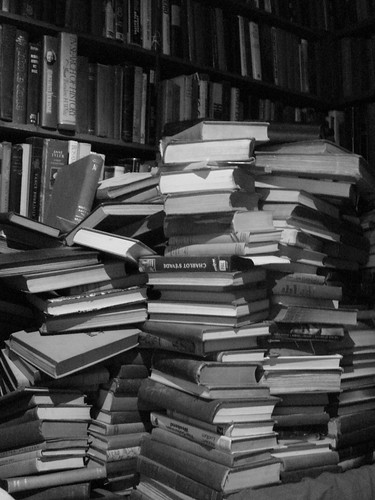
I think that hoarding books is a stand against mortality. If we've read them already, we might want to read them again. If we haven't read them yet, we might want to. Looking around at my shelves and boxes, I want to believe I will have time before I die to read them all, maybe again and again. Even if my current rate of reading means I'd need to live three lifetimes. To admit that I can't read all these would be to admit that at some point I'll stop reading. Difficult to imagine.


I recently some changes to my personal book hoard, and culled three boxes of books from the stacks. I decided to get rid of all the books I've read that I do not want to read again. That helped. But it also hurt to say goodbye to these objects. I'm tech-positive in so many ways, but like so many writers and readers, I am in love with the physical presence of books, and I have a hard time getting rid of them. A hard time embracing Kindle, and hard drives.


To make myself feel better, as I was sorting through the books I would let go, I decided to make another stack of books that I would never let go, that I would fetishize in the extreme. I made my inspiration shelf of books I've read that motivate me to write, a little shrine to their actual selves, a space for them to take up unapologetically in the world. If I must be mortal and my reading experience must be finite, then let's make it exquisitely finite, limit my great books to one shelf only. These are the books that are important to my life, at least, right now.


Here's my list, in no particular order. For some, it's the scope of the book. For some, it's the daring. The personal connection. The theme. The innovation. For a few it's just the time it was in my life, and how much it affected me. This is not a list of great books, or a list of personal favorites, but these are the books I can look at and feel something in me reaching. So, it varies:

Moby Dick by Herman Melville. The very copy I first read in high school. I have read it maybe 20 times, and in this copy I can see all my teenage notes.


House of Seven Gables by Nathaniel Hawthorne.


His Dark Materials Trilogy by Phillip Pullman.


Lord of the Rings Trilogy by J.R.R. Tolkien.


Jonathan Strange and Mr. Norrell by Susanna Clarke


Penrod by Booth Tarkington. A book I read again and again when I was a child, before I understood the irony, before I understood racism at all.


My Horse and Other Stories by Stacey Levine


You're a Bad Man Aren't You by Susannah Breslin\


Between Georgia by Joshilyn Jackson


The Rainbow by D.H. Lawrence


Tess of the D'Urbervilles by Thomas Hardy


Geek Love by Katherine Dunn


Observatory Mansions by Edward Carey


The Intuitionist by Colson Whitehead


The Most of P.G. Wodehouse


We the Living by Ayn Rand


A Room of One's Own by Virginia Woolf


Dubliners by James Joyce


Candide by Voltaire


So, I've broken it down to these 20 volumes. If I add another, I think I should subtract one -- that's how the brain works best. My own two books are not on the shelf, but I hope my next one will be. It's what I aspire to: to write something that belongs in my brain with these.


Challenge: What's on your inspiration shelf? What one book would definitely have to be there? If you take a picture, I'd like to see.

Tuesday, June 16, 2009

Blogging is Dead. Long Live Blogging.

Is it just me or does blogging these days seem tragically onerous? It's a little bit like living in a cabin in the woods, all by yourself. Your cabin may have been built with your own hands, and may be a cabin you're really very proud of, but ultimately it's a cabin that no one ever sees. It's just so far out in the woods, you know? No one sees the brick path you laid, the planters you filled with geraniums, the really neat pot hangers. No one sees your blog either.

It's lonely in the cabin. A person starts to feel like the only person in the woods. So we all come out to the lodge or the campfire, and we start chatting with the other mountain dwellers. Of course, when you're sitting around the campfire, you can't pontificate for hours on the state of your geranium planters. You have to keep it brief, keep it entertaining. That's Twitter. That's Facebook. That's Tumblr. Meet me at the campfire. I'll listen to what you have to say for thirty seconds at a time.

Here's the reality: I'm no longer visiting your blog. Well, that's not entirely true. I'm no longer visiting your blog just to visit. I will read your blog posts if one of these three conditions is met:

1. You tweet or Facebook a link to it that attracts my attention.
2. It appears in my reader, in which case I read it there, in my reader.
3. It turns up in a google search for something specific I want to know.

I don't care about your awesome page layout.
I don't care about your 18 inch blogroll.
I don't even care about your tag cloud.

No, not at all.

I do care, deeply, about your ability to write 140 words at a time in Twitter. I care about your ability to post funny or interesting Facebook updates. I care about your blog posts too, insofar as they fit into my reader, uniformly formatted with all the other posts by bloggers with which I've categorized you. I care about the words you write, but I no longer care about the context in which you write them. And really, I want to say to you, and to myself -- enough blogging. If you can say it in 140 words, you should. No more "What we did today." No more "Here's a funny anecdote." No more "Have you ever wondered about this question?" None of those things merit a blog post any more, and I'm not traipsing all the way out to your cabin to read that! Say it in 140 characters, right here at the campfire, or don't say it. Sorry!

It sounds extreme, and obviously, I'm not entirely done with blogging myself. So what kinds of things can I *not* say in 140 words? What topics do I actually feel justified blogging about, and what blog posts will I still trudge out to your blog to read?

1. Something that's long and funny.
2. Something that's long and useful.
3. Something that's long and contentious.

I might also blog something that's full of pictures, but it must also be either funny, useful, or contentious. Otherwise I can just Tweet or Facebook a link to the Flickr set.

That's really it.

Does this mean that we no longer have the attention span for blogs? Am I now supposed to say something wan and dire about the decay of this or that, or the disintegration of blah blah blah?

No. Because the writing isn't gone. The text isn't even really shorter. It's just that the internet has become more modular. Instead of the context of your layout, your blogroll, your About Me, your profile, your color scheme and the rest of it, you now exist in a larger context. You are now in the context of whatever feed that brings you to my screen. You are adjacent to everyone else. You are without context.

This isn't the decay of anything. It is a literary evolution. Now more than ever, content is king. The blog posts that people do write and pay attention to are less like journals, less like casual diaries, and more like articles -- meaty and complex. The blogs that survive Twitter and Tumblr and will be the ones with actual content that's accummulated into a body of work with merit. For the rest of the blogging population, Twitter, Tumblr, Facebook, Flickr, and Friendfeed will more than suffice. This is a good thing, people. While "Blogging" may be alive and well, "blogging" is dead. Face(book) it: It's just not worth posting the small stuff anymore.

Tweeting this post? Here's a short URL: http://bit.ly/ry1o8

Thursday, March 12, 2009

Twitter, Tumblr, Tags: You Are Still All Alone

In spite of the flurry of social media that surrounds me, I am still all alone in the space between my ears. In the moment of any creative act, there is nothing outside my own brain that can help me, no synergy, no immediacy of connection can save me. All the networking in the world is a noise and a dissipation when it comes to my book and the words that I have to put together, to get the book done.

I was standing in my kitchen when it hit me. It was one o'clock in the morning, and I had been writing my novel. Frustration drove me away from the keyboard and into the other room. I stood there with one hand on the phone, but at 1am, I couldn't call anyone here in Virginia. My family was asleep. Even west coast friends would need a reason to pick up the phone this late. There was no noise in the house. I was truly completely alone with my book and a couple of really tough scenes. If I were going to phrase the problem as a Tweet... if I were going to tell my writing group about it... if I were telling someone in an email... but it didn't matter how I could phrase it or present it or package the problem. I was only having it, not reporting it at all.


Of course, there were lots of people I could have "called" online. With a Twitter search, I could find people writing novels just like me and talking about it at that very moment. I could find blogs, message boards, email lists. I could shoot out a Facebook status update and within minutes have people tell me how it would get better, how they had been there, how I could fix it. But I realized, standing there in my physical form in the middle of the night -- tired, cold, close to a breakthrough -- that it wouldn't help.

I couldn't get what I needed from the vast amorphous "them" out there, the support, the network, the like minds. I stood there gripping the counter, facing the idea that I might just have to give up on writing this difficult book, doing this difficult thing. And I realized, it's not that I don't have the right support, the right help and connections. It's that support cannot help. Connections cannot write this miserable book. I have to write it. Word by word, wrenched straight out of my own brain, going straight down into my book -- not offered for critique on a message board, or discussed in Twitter, or announced in a blog.


This is me. Just this physical form and the electricity in my head, all online appendages amputated, all connections severed. This is you, alone, thinking. Making something up in your brain. Directing it onto the page. This is the only thing that ultimately matters.

Connections are addictive. I live online. My Twitter feeds my Facebook. My YouTube feeds my Tumblr. There's a camera in my laptop lid, a camera in my phone, and then there's my actual camera and my Flickr. On web sites and blogs, with hashtags and Digg, I find people who are watching the same show I'm watching, eating the same food I'm eating, shopping for the same kitchen appliance, etc. etc. In the interest of full disclosure, I am linking out to all my social media, but this isn't all. There are forums, games, elists, and more. If I have a question, or need to say something, I can push it out to hundreds of people who are the same as I am in some way: writers, readers, homeschoolers, people from the neighborhood here, people from my hometown. I can find people who think the same, look the same, live the same, and I can access them immediately. I have their ears.


Maybe you can push your message out to thousands who are just like you in some way. But are they just like you in that one crucial way? I cannot find anyone who is writing the same book. No one can talk to me about that. And if they did? Sound and dissipation.

It's me. It's 1 AM. There's a book not getting written. For this I have to be all alone. And when it comes down to getting alone, I can see that in this way, for this purpose, I have been alone all the while, with bees buzzing around my head, and a radio playing in the background, and a train passing by outside, and a fan blowing, rasping away. And yes, I get the irony: I am telling you this in a blog. I have found the way in which we are exactly alike. But for this purpose, in this one instance, let's not talk about it at all.

Monday, January 28, 2008

The Analogy of the Farting Horse

Just when you think you're being insulted, it turns out you're being enlightened.

So I'm working on the book proposal. My friend Susannah recently read a rough draft of the overview. She said, and I'm paraphrasing, "Look, it's a mess, but you're just rusty. It's like you were a horse that was cooped up in his stall all winter, and then he gets let out in the paddock, and he's bucking and farting and bucking and farting, you know?" And after I had finished reeling, and staggering, and after I'd said, "Wow, I've heard rough drafts compared to vomit, and excrement, and saliva, but never a horse fart," she explained, "Hey, it's not a criticism. No one stands there watching that horse thinking he's stupid because he's bucking and farting. He just has to get that out of his system."


So, I think I'm going to embrace the farting horse analogy, actually. There's something joyful and mad about a farting horse. If you've never experienced it, I can't explain it. I'm not going to say it's sublime or anything, but it makes you smile. And bucking, farting horses are certainly not concerned with how their moves are going over in the press.

Wednesday, January 2, 2008

Never Admit Defeat

I guess it may turn out to be that I am the last person in the universe to conclude that I am incapable of writing books for children.

My two closest friends, both successful writers, have expressed deep concern over the state of this manuscript. One has said, repeatedly, "It is the worst thing you have ever written." The other said that you need to be 50 years old to read it. In other words, not accessible to the 8-12 year old market for which I am aiming.

My two closest family members loved it. Beyond measure. Well, bully for me. I managed to convince my husband and one parent. I must be a freakin' genius. Kristen likes it. That makes one person who's not related to me. One.

The thing is, I do not believe the negative criticism. At all. I think it is a great book. It may not be finished, but it is great. More importantly, it is what I want. I want to write this book, perfect this book, publish this book, and read this book in public. None of my other projects, more sophisticated and literary in nature, make me feel pride. They all seem like, well, okay, I wrote this knobby thing. It may divert you.

I have concluded that the book needs something major, something sweeping, something to change the entire thing. Something holistic. Something never seen before under the sun. When it has that, the diction won't matter.

For now, I am going to keep working through it, revising and embellishing it. It's like decorating a lamp with buttons and beads. If you really love the lamp and every bead makes you love it more. Liking the work this much, how can I be completely wrong about it?

In the process of doing this, I will have a big idea that will change the whole book. I have them for other people. Why shouldn't I have one for me?

Tuesday, November 20, 2007

Writing About Death

It's hard to write about death. I didn't realize how hard it was until I tried to really do it myself. There was a professor at my college who did it well: Richard Messer. When I had him as a writing teacher, I was 19 and 20, and writing saucy, trouble-making things. He responded positively to something about my writing, which gave me confidence to keep doing it. Here is an excerpt from his book Murder in the Family.

*****

I kept her old leather coat--but she had that brand new beautiful yellow one,
why was she wearing this, her father's castoff, shabby and too big? I put it
on and feel the hairs on my neck rise. Something has fallen out of the
sleeve and under the table, then under the bed, as if it were alive. Down on
my knees, I feel into the darkness under the box springs. The soft whorls of
lint dust. It is at this moment I know again that someone else is in the
room. At the table by the window in the other room. Someone who sits writing
down everything I do with a black pen on white paper. And if the leaden pen
stops its slow-motion scrawl, the wall of language will dissolve, and there
will be nothing between me and the writer, between the writer and the
terror.

Together we watch a name appear on the white surface: Bruno.

The one on his knees rears up as though struck. And so he has been
struck--by the thought of his children dying. Where are they? They have to go to
school, tell curious playmates what has happened. They don't want to stay home.

He explains this to himself and it is to Bruno he speaks, the one who sits
like a bear, the one who records, the one who listens. All week he has only
been going through the motions; he knows it now. People around
him try to act as though nothing has happened; so does he. But Bruno knows
better. From the moment he recoiled in the hospital morgue after seeing her
body, he has been split in two. The part of his life he lived through her
began to recede into the past, calling out to the rest of him like someone
buried alive. That it will always be this way is what he fears most. That he
will never feel wholly involved, wholly there in the world again. That,
diminished, preoccupied, he will drift on in the prison of an unreal
present-past, always reaching back inside himself, trying to save her.

*****
At the time I knew him, I thought, wow, what a dark, kind of melancholy person, what a grey and haunted person. He was kind of scary and cool. Now that I'm older and I'm trying, myself, to write about death, I respect the writing he was doing. Death is really physical and low, and the awfulness is grinding and slow. The part right after the death is so breathless, how mundane, but your legs keep moving forward. I am not entirely sure what made me dig out this book and look at his work, but I'm glad I did.

Another one of his line that I have never forgotten is about how he wondered if he had spent his life trying to wake up, or trying to go to sleep. And in another, he says the dawn came through the window searching for survivors. Pretty amazing stuff, and it sticks with me after lo these long fifteen years.