
For the first 250 pages of this book, I was wondering, so what?
The author seemed content to play with the idea of time travelling, let us know how and when it works in this book, fill in the landscape of the place and the characters, and just let the novelty of the concept pull us along. The characters, they are so sensitive, so learned, so eloquent. The scenery, it is so hip, so rich, so Chicago. And who doesn't love time travel? Especially when you don't have all those annoying scifi considerations like logic. Sure, the character can meet himself in the past. No, he doesn't change the outcome of his own life, except in small, poignant ways. Everything is convenient, this is literature, not science fiction, it doesn't have to jive like it would in a Ray Bradbury story. Time travel is so interesting, when it doesn't have to make sense. Surely that would be reason enough to keep turning pages.
Apparently, it was. But I was waiting for the engine to engage, waiting for the coconut husks to go up in a blaze, waiting for myself to start to care. There were three things that bothered me in this beginning half of the book. First, I was unable to fully digest the fact that he was visiting his wife as a six-year-old. That is, she was six. He was thirty-eight. He held her on his lap. That was weird for me. Second, there was a glancing mention that whenever he met up with himself in the past and had a spare moment, he was... somehow masturbating? With himself? Or something? It was just a suggestion, and nothing was ever shown, but it was a haunting one. Third, the suffocating elitism of the characters, their artiness, their social status, it was all so precious. As if, of course, these characters are worth caring about -- look at their travails -- and they read Borges for pleasure! Naturally they, they, these beautiful souls, must feel things more exquisitely and tragically than the rest of us fools. Imagine if time travel had been wasted on a troglodyte like me. I might not have put it in the proper literary context, given my lack of ability with French.
Then, I think it was on page 259 of my paperback, the engine engaged. 1. Henry has never come back to the past from beyond the age of forty-three. (What happens at 43? Does he die or is he cured?) 2. Henry has to stay in one place long enough to get through a wedding ceremony without blinking out of his clothes. (He can't control the time travel and he arrives naked returns naked. He leaves little piles of clothes behind him. Stress seems to activate it.) 3. Henry and Clare want to have a child. (Will they be able to? Will it be a time traveler?)
Everything after that was much much more interesting. And at the end of the book, I was very moved. And very invested. And all that stuff. After it was over, I found myself missing Henry and Clare, with all their intellectual nonsense, and all their tragedy. I moved on to another book, but I would have happily read this one for 500 more pages.
 Niffenegger invented a new reason to be sad in a relationship. And illustrated it beautifully. In some ways, I guess you could say that this time traveling, meeting up in different stages of life, coming and going, sometimes synchronizing and sometimes missing each other entirely, is a metaphor for all relationships and the ups and downs thereof, but I'd rather see it as something entirely other, with different rules, different reactions. Something I could never experience. I really respect Niffenegger's bravery in tackling this complete mess of material, and her competence in organizing it into an accesible narrative. Makes me feel shame for being baffled by my much-less-complicated novel. It will be interesting to see what she tackles next.
The author seemed content to play with the idea of time travelling, let us know how and when it works in this book, fill in the landscape of the place and the characters, and just let the novelty of the concept pull us along. The characters, they are so sensitive, so learned, so eloquent. The scenery, it is so hip, so rich, so Chicago. And who doesn't love time travel? Especially when you don't have all those annoying scifi considerations like logic. Sure, the character can meet himself in the past. No, he doesn't change the outcome of his own life, except in small, poignant ways. Everything is convenient, this is literature, not science fiction, it doesn't have to jive like it would in a Ray Bradbury story. Time travel is so interesting, when it doesn't have to make sense. Surely that would be reason enough to keep turning pages.
Apparently, it was. But I was waiting for the engine to engage, waiting for the coconut husks to go up in a blaze, waiting for myself to start to care. There were three things that bothered me in this beginning half of the book. First, I was unable to fully digest the fact that he was visiting his wife as a six-year-old. That is, she was six. He was thirty-eight. He held her on his lap. That was weird for me. Second, there was a glancing mention that whenever he met up with himself in the past and had a spare moment, he was... somehow masturbating? With himself? Or something? It was just a suggestion, and nothing was ever shown, but it was a haunting one. Third, the suffocating elitism of the characters, their artiness, their social status, it was all so precious. As if, of course, these characters are worth caring about -- look at their travails -- and they read Borges for pleasure! Naturally they, they, these beautiful souls, must feel things more exquisitely and tragically than the rest of us fools. Imagine if time travel had been wasted on a troglodyte like me. I might not have put it in the proper literary context, given my lack of ability with French.
Then, I think it was on page 259 of my paperback, the engine engaged. 1. Henry has never come back to the past from beyond the age of forty-three. (What happens at 43? Does he die or is he cured?) 2. Henry has to stay in one place long enough to get through a wedding ceremony without blinking out of his clothes. (He can't control the time travel and he arrives naked returns naked. He leaves little piles of clothes behind him. Stress seems to activate it.) 3. Henry and Clare want to have a child. (Will they be able to? Will it be a time traveler?)
Everything after that was much much more interesting. And at the end of the book, I was very moved. And very invested. And all that stuff. After it was over, I found myself missing Henry and Clare, with all their intellectual nonsense, and all their tragedy. I moved on to another book, but I would have happily read this one for 500 more pages.
Niffenegger invented a new reason to be sad in a relationship. And illustrated it beautifully. In some ways, I guess you could say that this time traveling, meeting up in different stages of life, coming and going, sometimes synchronizing and sometimes missing each other entirely, is a metaphor for all relationships and the ups and downs thereof, but I'd rather see it as something entirely other, with different rules, different reactions. Something I could never experience. I really respect Niffenegger's bravery in tackling this complete mess of material, and her competence in organizing it into an accesible narrative. Makes me feel shame for being baffled by my much-less-complicated novel. It will be interesting to see what she tackles next.



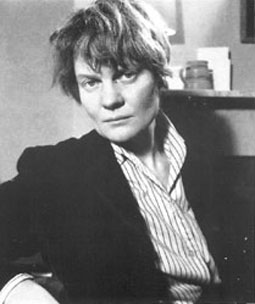
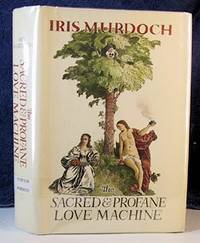 I will move on to The Black Prince -- I've already started it. It's hitting me a little like Humbert McHumbertson, so I dunno if I'm going to get the haw haw haw I'm looking for. Having read such a staggering lot of P.G. Wodehouse, since I was a little kid, and seeing the British upper class skewered in this very la-la pass-the-port way and hasn't everyone got a ridiculous name, it was maybe good for me, or something, to see this grittier and less raucous version of it. I mean, it's probably considered obscene to even compare these two writers, and I'll be met outside by a few stern feminists and beheaded for failing to appreciate Iris Murdoch. I said I would give her another shot. I have the next book in my bag. 'Kay?